
The CCP Forms
The Continuing Competence Program (CCP) Forms are updated annually and are available for download or print at the beginning of each year. They are designed to support your ongoing professional development and consist of two parts:
- Part A – Self-Assessment
- Part B – Learning Plan
There are two versions of the forms:
- One for Registered Nurses
Legislation requires that these forms be kept for a total of 5 years. The current year’s plan plus the previous four years forms
Related pages
Part A: Self-Assessment
Step 1: Document Review
This step involves reviewing key documents to reinforce your understanding of professional expectations and identify any updates you may have missed. Documents include:
- Practice Expectations
- Entry-Level Competencies
- Other newly released or revised materials
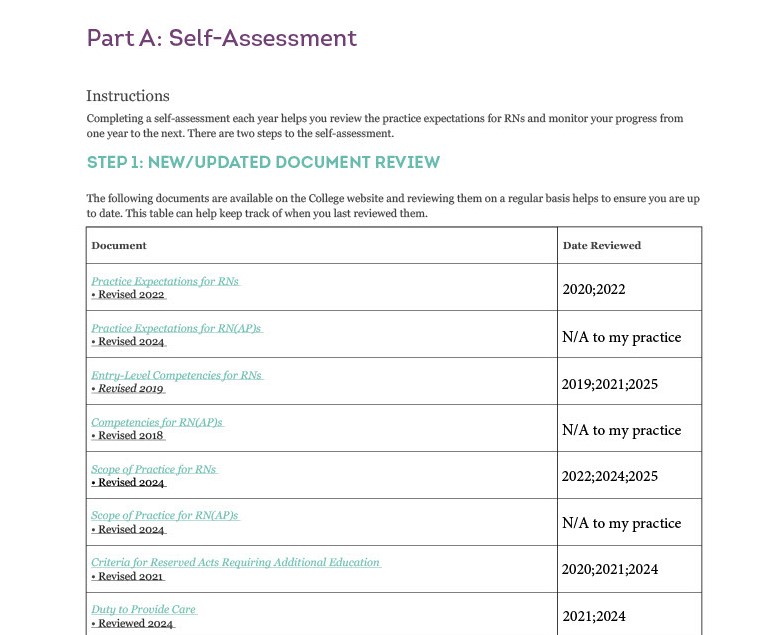 A table is provided to help you stay organized. It includes:
- Document titles
- Direct links to each document
- Date of last revision
- A column for you to record the date you last reviewed each document.
This tool helps you track your progress and ensures you remain current with essential standards.
Step 2: Self-Assess Your Practice
This step invites you to reflect on your nursing practice in relation to the Practice Expectations—the foundational standards all registered nurses and nurse practitioners must meet to provide safe, ethical, and competent care.
These expectations apply across all roles and settings, whether you’re working in a clinical, administrative, educational, or research environment.
Why Does Self-Assessment Matter?
Your self-assessment is a personal tool designed to help you:
- Reflect honestly and objectively on your current practice
- Identify strengths and areas for growth
- Set the stage for meaningful professional development
As your career progresses, your self-assessment will naturally evolve—moving along the continuum from novice to expert. This is your opportunity to focus on competencies you’ve rated lower and take steps to strengthen them over time.
💡 Tip: Use this reflection to guide your learning plan and support your ongoing growth as a professional.
Part B: The Learning Plan
As a nurse in Manitoba, your annual learning plan is more than a requirement—it’s a powerful tool for growth, reflection, and safe practice.
It’s a Professional Requirement
All registered nurses and nurse practitioners must complete a learning plan each year as part of the Continuing Competency Program (CCP). This is mandated under the Regulated Health Professions Act (RHPA).
It Supports Lifelong Learning
Your learning plan helps you:
- Reflect on your current practice
- Identify areas for growth
- Set meaningful goals for development
It Improves Patient Care
By staying current and building new skills, you enhance your ability to deliver safe, ethical, and competent care—benefiting both clients and communities.
It Shows Accountability
Creating and following a learning plan demonstrates your commitment to:
- Professionalism
- Public trust
- Continuous improvement
It Encourages Self-Reflection
Recognizing your strengths and growth areas builds confidence and helps you take charge of your professional journey.
The learning plan forms are organized into two easy-to-navigate pages.
On the first page, you’ll outline the foundation of your plan by entering:
- Your learning goal
- The activities you’ll complete to achieve it
- The expected completion date for each activity
- The actual date of completion once finished
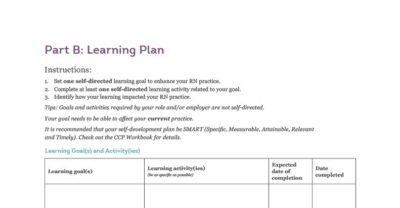
This structure helps you stay focused, organized, and accountable as you work toward meaningful professional development.
The second page of your learning plan is where you reflect on how your learning has influenced—or is expected to influence—your nursing practice. This is your Impact on Practice statement.
Use this space to describe:
- How your learning has enhanced your skills or knowledge
- Changes you’ve made or plan to make in your practice
- How this learning supports safe, ethical, and competent care
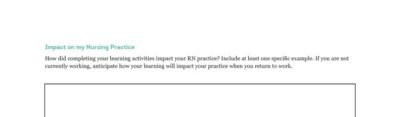
💡 This reflection helps connect your learning to real-world outcomes and demonstrates your commitment to continuous improvement.
To learn how to build a learning plan that’s both impactful and meets the College’s criteria, visit the Learning Plan webpage. It’s your go-to guide for setting meaningful goals and aligning your plan with professional standards.